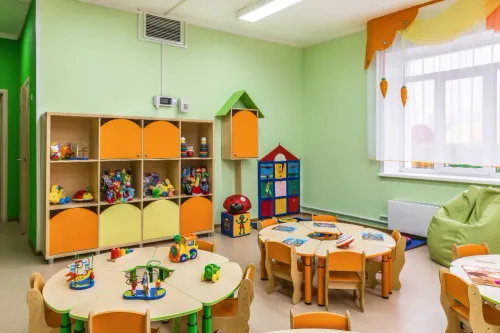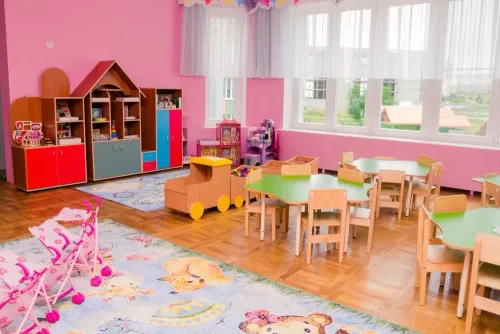
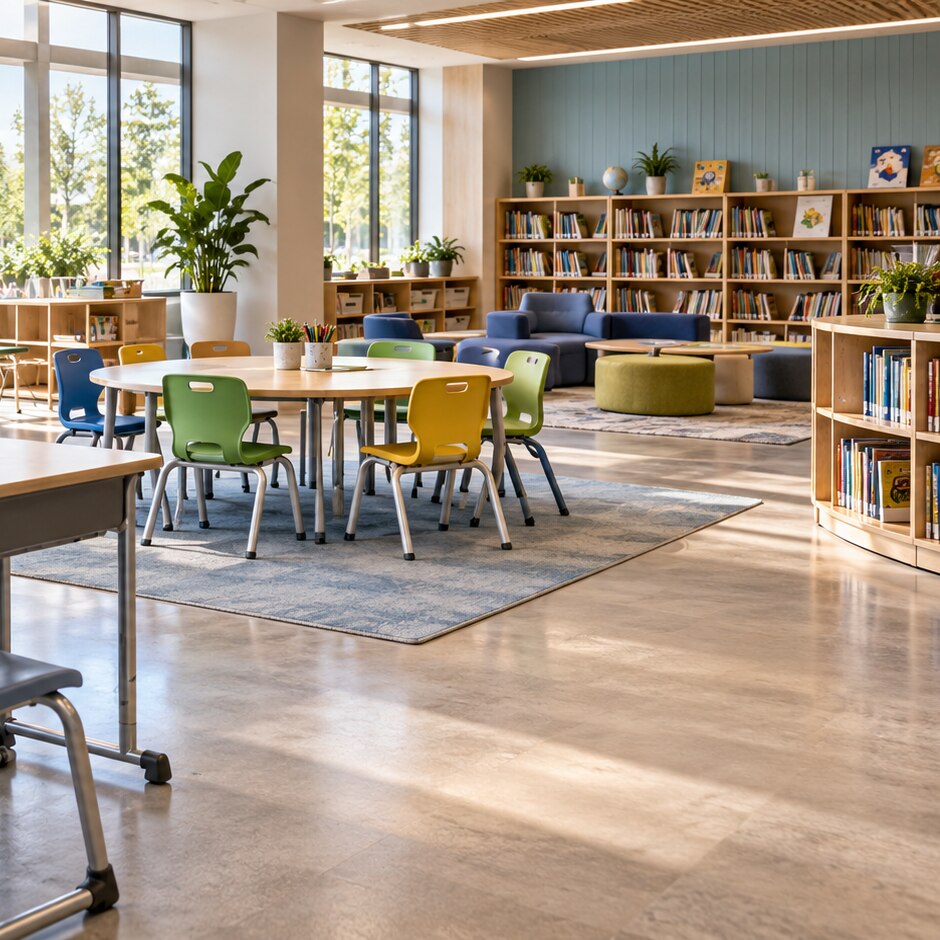
A manufacturer suited to a kindergarten classroom may be poorly equipped for a science laboratory, computer room, or outdoor learning area. By defining each room’s measurable requirements, checking product evidence, and comparing service capability alongside price, you can shortlist suppliers that fit the space and remain supportable after installation.
Key takeaways
- Define each room’s activities, users, dimensions, and risks before requesting quotes.
- Ask manufacturers for material specifications, test records, safety details, and completed project evidence.
- Test furniture in the planned layout for posture, movement, access, and equipment use.
- Score design, delivery, installation, warranty, and service capabilities in one decision matrix.
Start with the Learning Space, Not the Catalogue
Define the room’s users, activities, dimensions, and risks before comparing manufacturers. A kindergarten room needs low, stable pieces for small children; a laboratory needs worktops and service integration; a computer room needs cable management and equipment access. The manufacturer must demonstrate that capability in a layout, specification, or completed project—not just a catalogue photograph.
| Space | Manufacturer capability to verify | Evidence to request |
|---|---|---|
| Kindergarten furniture | Rounded edges, stable low-height tables, washable finishes, and age-appropriate chair-table sizes | EN 1729 size marks, compatible size grades, and an ASTM F2613 report stating product scope and age range |
| Library furniture | Shelving that resists tipping, accessible storage depths, quiet hardware, and acoustic control | Anchoring details, load ratings, replacement-part availability, and noise specifications |
| Science laboratory furniture | Chemical-resistant worktops, sealed joints, durable sinks, and coordinated gas, water, power, or extraction services | Chemical-resistance data, service drawings, and maintenance procedures |
| Computer room furniture | Cable routing, ventilation around equipment, monitor depth, and repair access | Cable-management drawings, load ratings, and a populated room layout |
Give the manufacturer the actual room plan with tables, chairs, storage, teaching aids, and equipment shown. Check the remaining 30-by-48-inch clear floor space for each mobility device and turning areas after placement, rather than trusting an empty-room plan.
Ask for caster type, brake behaviour, floor compatibility, load rating, and noise-test conditions; mobility can otherwise create rolling, marking, or noise problems. For upholstered pieces, identify the installation jurisdiction and request testing of the complete assembly, including its permanent label where required.
Compare Materials, Construction, and Safety Evidence
A durable, safe school product is proved by its construction, test documents, cleaning limits, and replacement plan—not by a catalogue photograph. Inspect an assembled sample for rigid joints, flush fasteners, sealed edges, rounded corners, stable feet, and surfaces that do not trap dirt.
| Material | Evidence to compare | Risk to check |
|---|---|---|
| Plywood | Veneer quality, sealed edges, screw-holding strength, panel thickness | Open edges absorb moisture and delaminate |
| Particleboard | Moisture-resistant grade, edge banding, protected screw points | Swollen cores loosen hardware after spills |
| MDF | Sealed faces and edges, density, finish adhesion | Unsealed cut-outs deteriorate during wet cleaning |
| Solid wood furniture | Moisture content, joint design, movement allowance, durable topcoat | Seasonal movement can split panels or loosen joints |
Ask the manufacturer for:
- A construction drawing showing joint types, hardware, edge radii, load limits, finish system, and warranty exclusions.
- A parts list confirming replacement glides, casters, tabletops, chair shells, fasteners, and upholstery covers will remain available for the intended service period. Components should be replaceable without discarding the unit; that is modular repairability, not nominal modularity.
- ASTM F2613 documentation for children’s chairs or stools, naming the product scope, age range, test report, and exclusions. For export specifications, request the EN 1729 size mark and confirm compatible chair-table size grades.
- A California Department of Public Health Standard Method v1.2 report for the assembled product, not only its material or finish.
- A tested disinfectant list with dilution, contact-time, repeated-cleaning evidence, and warranty exclusions. For upholstered items, verify the jurisdiction, complete-assembly fire test, and permanent label, including California Technical Bulletin 117-2013 where applicable.
Test Ergonomics and Accessibility in the Actual Layout
A drawing that works only before furniture arrives is not an accessibility check. Test the proposed arrangement at full scale, with chairs pulled out, storage opened, teaching aids positioned, and staff moving through the room.
1. Mark every item on the floor with tape, using the quoted school furniture dimensions. Place tables, chairs, mobile storage, shelves, and teacher workstations exactly as specified. Measure the remaining aisles and routes after placement, not from an empty-room plan.
2. Test child fit at each workstation. Record table height and seat height, then have representative children sit with feet supported, knees near 90 degrees, and elbows level with the work surface. For export furniture, require the EN 1729 size mark and confirm that each chair-table pair uses compatible size grades.
3. Reserve clear floor space for mobility devices. In U.S. projects, provide at least 30 by 48 inches for a wheelchair or other mobility device at the intended position, then check the required wheelchair turning space, including a 60-inch turning circle where the ADA layout calls for it.
Repeat the check after doors, drawers, and chairs are opened.
4. Walk the route with a wheelchair, walker, and loaded teaching cart. Test thresholds, corners, slopes, and passing points with the room occupied. Specify caster type, brakes, load rating, floor compatibility, and noise conditions; a chair that rolls easily on carpet can drift or mark a resilient floor.
Require the manufacturer to revise the plan when a route fails, rather than asking staff to manage the obstruction after installation. Keep the marked-up layout and a full-size mock-up sign-off with the purchase order.
Evaluate the Manufacturer’s Design, Delivery, and Service Capability
The lowest unit price can become the highest cost when a missing caster stops a room. Compare design evidence, delivery, installation, repairability, and support across the furniture’s service life.
| Option | Design capability | Delivery and service |
|---|---|---|
| Local school furniture manufacturer | Faster site measures, prototypes, revisions, and custom school furniture; verify capacity for specialist rooms. | Shorter freight routes; confirm production slots, school furniture installation, warranty response, and stocked replacement parts. |
| National supplier | Broader tested range and documented processes; check whether standard modules fit your rooms. | Useful for volume orders; confirm regional lead times and one accountable service contact. |
| Distributor | Convenient brand choice; obtain the original manufacturer’s test reports and parts list. | Confirm mark-ups, installation responsibility, and who handles failures. |
| Imported product | Check dimensions, local standards, spare-part compatibility, and adaptation requirements. | Add freight, customs, damage inspection, duty, currency exposure, and long replacement-part lead times. |
Request a reconfiguration drawing showing independently replaceable glides, casters, fasteners, tabletops, chair shells, and upholstery covers. That proves modular repairability rather than nominal modularity.
For children’s chairs and stools, ask for ASTM F2613 scope, age range, test report, and exclusions. For upholstered items, verify complete-assembly testing and labeling for the installation jurisdiction; California installations require attention to Technical Bulletin 117-2013. Request cleaning chemicals, dilution limits, contact times, finish exclusions, and repeated-cleaning evidence.
For a Bengaluru project, assess Arko Global against the same site-measurement, installation, and parts commitments as every competing school furniture manufacturer.
Use a Procurement Process and Decision Matrix
Shortlist at least three manufacturers that can meet the room brief, then give each the same drawings, quantities, delivery address, installation requirements, and response deadline. Do not compare one supplier’s detailed proposal with another’s catalogue page.
1. Request a school furniture quotation showing unit prices, tooling, delivery, installation, taxes, replacement parts, payment stages, and exclusions. Ask for the school furniture lead time from approved drawings to site delivery, not a vague “standard delivery” promise.
2. Check evidence before scoring. Request cleaning-chemical lists, dilution and contact-time limits, repeated-cleaning test evidence, finish warranty exclusions, and the furniture warranty. For early-childhood chairs, request the ASTM F2613 product scope, age range, exclusions, and test report.
For low-emission claims, verify testing of the assembled product under California Department of Public Health Standard Method v1.2, not only its materials.
3. Disqualify any bid that omits required safety evidence, cannot provide anchoring details for storage, or substitutes material certificates for complete-assembly testing. For upholstered items, confirm the installation jurisdiction and complete-assembly fire testing; California projects require Technical Bulletin 117-2013 labeling where applicable.
4. Score every surviving bid from 1 to 5, multiply by the weight, and divide the total by 5 to produce a percentage. Record evidence beside every score so institutional furniture procurement remains auditable.
| Criteria | Weight |
|---|---|
| Space-specific design and ergonomics | 25% |
| Construction, finish, cleaning, and safety evidence | 20% |
| Warranty, parts, and modular repairability | 15% |
| Installation and after-sales support | 15% |
| Lead time and delivery controls | 15% |
| Price and quotation completeness | 10% |
5. Choose the highest evidence-backed score, then document why a cheaper bid lost. Require written approval for substitutions, delays, or changes to tested materials.
Frequently asked questions
Why should you define the learning space before comparing manufacturers?
Room activities, users, dimensions, and risks determine the furniture features you need. Kindergarten rooms need low, stable pieces; laboratories need worktops and service integration; computer rooms need cable management and equipment access.
What safety evidence should you request from a school furniture manufacturer?
Request material specifications, construction details, edge and corner treatments, stability information, load limits, safety test records, and evidence from completed projects.
How can you test whether school furniture is ergonomic and accessible?
Place the furniture in the actual room layout and check posture, reach, circulation space, wheelchair access, supervision sightlines, storage access, and equipment connections.
What should a school furniture procurement decision matrix include?
Score each manufacturer’s design fit, materials, safety evidence, layout capability, delivery schedule, installation plan, warranty, maintenance support, and response to defects.